This article was posted on the Medium website by Isabella Hope. Medium ‘is a home for human stories and ideas’, where the goal is to deepen the collective understanding of the world through writing. You can view the original post here.
Why an everyday Turkish phrase has changed my life for the better
This isn’t a post about crushing brutal workouts or struggling for years to launch a new brand or company for it to finally fly. Nor is it about succeeding as an entrepreneur against all the odds or working nights to finish a Master’s thesis while raising a family. All those are fantastic achievements, and these are indeed ‘hard things’ celebrating — and there’s a space for talking about them; it’s just not in this post.
Nor is this a post about the ‘hard things’ people face due to difficult and unfair circumstances. The ‘hard things’ in this category are things that we wish could be magicked away when we see friends and loved ones struggling. The friend raising a disabled child that has no way of knowing what the future holds. The friend who gets out of bed every morning to show up for her family when she feels like the depression is all-consuming.
We all know people who find the strength to do hard things every day.
Çok zor.
These two tiny Turkish words have changed how I live my life. ‘Çok zor’ means ‘very hard.’ And over the five years that I’ve lived in Istanbul, I think I’ve heard it nearly every day from my Turkish friends and neighbors. People usually use this phrase in the context of offering me a solution when attempting to do something deemed ‘very hard.’
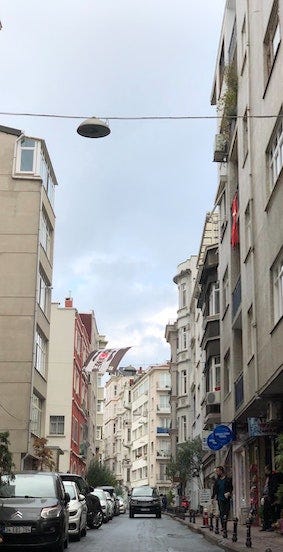
Carrying a pram with a toddler in, with a baby strapped to me, up steep steps in 40 degree heat to go and buy fruit and veg from the bazaar. Çok zor.
Living in inner-city Istanbul with a young family without a car for three years. Çok zor.
Living in a 4th-floor apartment with no lift with 3 kids. Çok zor.
All of these examples are little things. But over the years, the ‘çok zors’ began to add up in my head. They worked their way into my heart. I found validation in them. And my British stiff-upper-lip pride began to give way to self-compassion.
I began to see that choosing the easy option sometimes, instead of always doing the ‘hard thing’ was OK. It was accepting the observation of my Turkish friends that, sometimes, even I could do the ‘hard thing,’ I don’t always have to. And accepting help (or defeat) sometimes, means that I’m happier. It also means that maybe I can save some of my energy to do the ‘hard things’ I choose (aka, those workouts, urgh).
Last week for winter break, we decided to fly out of town down to the south of Turkey to the beautiful village of Kaş. A friend told me it would be too cold in Kaş in January. We didn’t listen. We’re British; we’ll be fine, we said (we usually are, to be fair). After I packed for a family of 5 and we traveled by car, then plane, then car again, we found ourselves in a cold stone house with only a fire and a stove to keep us warm (there was snow on the ground). The baby already had a never-ending cold, and the floor was concrete. Stay calm, mama.
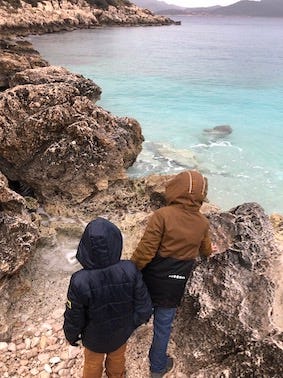
After moving to another accommodation and the weekly forecast was showing 100% rain all week, I turned to my husband, teeth chattering in front of the electric heater in our icy room, and said, ‘this is too hard. Let’s go home.’
We managed to change our flights to fly back to Istanbul early. We enjoyed a staycation at home and could use the rest of the rental fee from our house to go back later in the year.
Three years ago, I would have forced my family to soldier on and finish that holiday (blue lips and all). I would NEVER have considered cancelling my family’s holiday to go home because I’d have demonised the decision as ‘taking the easy way out.’ But staying in that tiny, freezing cottage in the pouring rain for a whole week WAS ‘çok zor.’ And I could suck it up, admit we’d made a mistake in coming, and take the easier option to go home.
To thrive living in a host country, a few more ‘easy way outs’ were just what I needed.
I can do hard things.
Sometimes, though, I’m learning that it’s OK not to. All the little decisions to take the easier road have added up over time to a happier, more relaxed me(I am very thankful we have a lift in our new apartment, and I can order my groceries online).
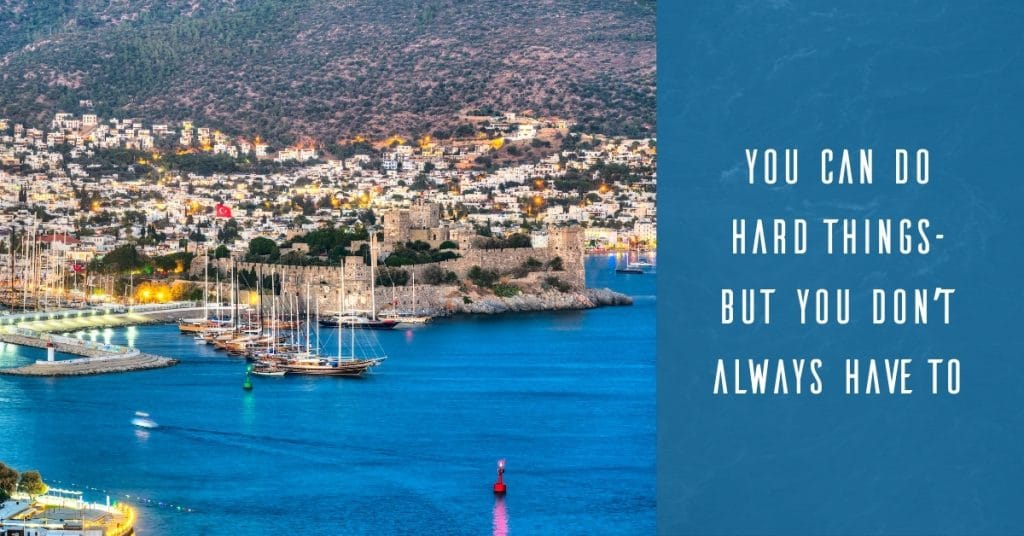
You can do hard things when you have to. You can do hard things when you choose to. And then sometimes, you DON’T have to. Maybe, like me, it’s time to give yourself a break now and then.

Isabella has lived in a major city the Middle East with her husband and 3 children for 8 years. She’s a churchplanter, copywriter and is stubbornly persevering to see a movement of multiplying disciples across the nation!