

For the past 5 years, the Unreached Network has run an Internship programme for people of all ages and backgrounds, comprising a 12 month, full time intensive mentorship for those exploring cross-cultural mission at home or overseas.
The aim of the internship is for our students to grow in ‘mission literacy’ in both understanding and skill, being able to relate cross-culturally for the sake of the gospel.
The internship includes monthly Zoom training sessions with experienced speakers, reading and practical assignments, including a placement of up to 3 months in a cross-cultural setting. To date, most of our students have come from the global north and the course is conducted in English with English language resources.
Recently, we have been discussing how we might develop our Internship programme to make it even better and more applicable to international contexts. We reached out to partners in Egypt, Malaysia, Taiwan, Armenia, and Cyprus to receive feedback on ways we could improve our programme; below, we summarise our findings as well as some key quotes from our partners.
Relational & Experiential Learning

In our feedback, the consensus was that Western, classroom-style, or heavily written academic programs do not translate well. Internship participants generally prefer mentorship, apprenticeship, and “walking alongside” a leader over this style of teaching. Storytelling and group reflection are valued over individual study, being more engaging, and therefore more effective.
It’s important to note that in some contexts, leadership is viewed through the lens of “parenting,” where the intern is expected to observe and copy the model provided by an elder, or mentor. In this case, it’s important for the mentor to be experienced in what they advise, and prepared to step into this role of guidance and friendly relationship with the intern.
“Learning is often relational, observational, and experiential, rather than purely classroom-based. Many people learn best by walking alongside someone, observing how ministry is done, and reflecting together afterward.”
High-Context & Indirect Communication
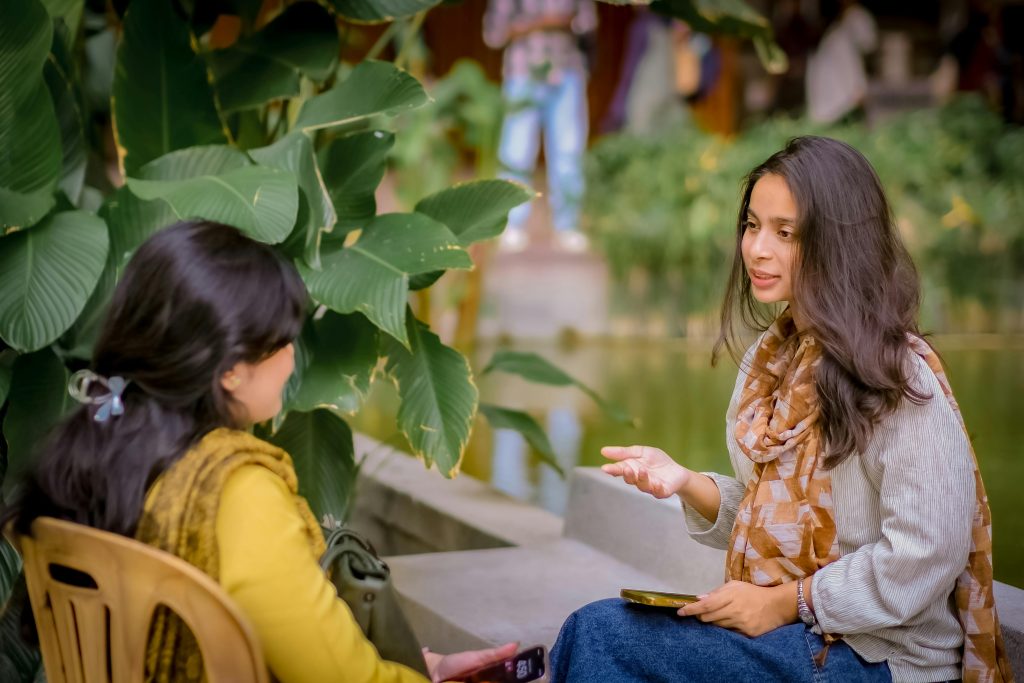
Communication styles in the regions of Egypt, Malaysia, Taiwan, Armenia, and Cyprus tend to be more “high-context” than in the West, which means much of the meaning is implied through relationships and social cues rather than being stated explicitly. In these locations, direct confrontation, strong opinions, or quick criticism are perceived as deeply disrespectful, so more subtle approaches, especially to sensitive topics, are often necessary.
We have also learned there is a “need for patience” regarding decision-making and spiritual breakthroughs. Westerners often mistake a slow relational process for a lack of progress, but instead may need to change their perspective in order to understand and effectively help participants from other contexts.
“Boundaries and communication are not clear and often implicit rather than explicit. Being able to cope with not knowing or understanding is essential.”

Hospitality as the “Main Business”
While working cross-culturally abroad, in many contexts the “work” of the mission is often inseparable from the “life” of the community. Meals, tea, and informal gatherings are not the prelude to the work—they are the work. Trust is built through shared life, hospitality, and practical service.
It’s so important for participants to learn that very often failing to receive hospitality (such as refusing a meal or tea) can be just as damaging as failing to give it. It would be inadvisable to ‘politely decline’ invitations of hospitality in these contexts when seeking to build relationships.
“Relationship building happens before the actual ‘main business’ and afterwards—usually over dinner. If the relational connection can be maintained, people are incredibly kind and faithful.”

Cultural Humility vs. “Western Superiority”
Amongst our partners, significant warning was raised regarding the “Global North” or “Western” mindset. There is a specific stigma attached to the “white evangelizer” or the “expert” who arrives with a pre-packaged model. Harmful behaviours include prioritising efficiency over presence, assuming Western church models are universal, and lacking a “learner’s posture.” When seeking to build relationships cross-culturally, an attitude of humility, a willingness to learn, and a genuine love for the people are vital.
Respecting local religious history—whether it be Orthodox, Islamic, or Confucian—is non-negotiable for building long-term trust.
“Harmful behaviours include assuming Western models of church, leadership, or mission are universally applicable and better. A task-driven mindset can damage trust.”
Collectivism & Authority

Unlike individualistic Western cultures, the communities within the countries of Egypt, Malaysia, Taiwan, Armenia, and Cyprus prioritise the group, the family, and the elders. Interns must be willing to set aside personal preferences, letting go of what they may be used to in the culture they’ve grown up in for the benefit of the groups they’ll be working with.
Respect for seniority and authority is also a core value within many of these cultures. Learning to “draw people out” without disrespect is a skill interns will need to develop when working cross-culturally, as locals may be hesitant to speak up in group settings out of respect for hierarchy.
“People’s identities and preferences lean heavily in favour of the group rather than the individual. Being willing to consistently put aside one’s personal preferences… is important but actually something that can be quite draining.”
Summary of Necessary “Soft Skills” for Interns
Based on the responses, an intern’s success depends less on their theological knowledge and more on these five attributes:
- Flexibility: The ability to handle “not knowing” what’s happening.
- Patience: Moving at the speed of relationships, not the speed of a schedule.
- Self-Effacement: Talking about oneself less and listening more.
- Conservative Sensitivity: Adhering to local norms in dress, gender interactions, and religious respect.
- Humility: Approaching as a student of the culture, not a teacher of the “right way.”
Conclusion
Across these diverse contexts, there is a striking consensus: effective cross-cultural mission is less about “transferring information” and almost entirely about relational presence, cultural humility, and experiential modelling. The results of the feedback we received have taught us what we need to be mindful of when training future Interns in order for them to understand how they might reach the unreached effectively, lovingly, and with humility.
To learn more about our Internship programme, click here.


The Unreached Network exists to inspire and strengthen cross cultural mission to Unreached Peoples across the global Newfrontiers family.
We do this by training, resourcing, inspiring and creating spaces for network, with individuals, churches and spheres as they take responsibility for sending.
Want to partner with us? Get in touch at www.unreached.network/contact-us