I will
I will not lack
I will not fear
I will dwell
Three simple phrases that I have prayed most days as we enter month six of living in an unfamiliar-to-us culture. Drawn from Psalm 23, these three ‘I will’ statements form a kind of liturgy. A prayer and a declaration for myself when I do not feel any of those things. A kind of ‘come on my soul’ response.
Praying these words so often has meant they are easily at hand when I need them. They are surface level, by which I mean: easily fished out when my mind and heart are swirling. When the disorientation of cross-cultural life seems more powerful, when the brain fog is dense, when the heart is weary, these words are there.
On the flight back from a visa run (another new-to-us rhythm), as anxiety rose at the impending reality waiting for us on the ground (a life that is right, that carries clear costs to relationships, health, comfort…) I prayed these words again. And a penny dropped: like Psalm 131, I calmed and quieted myself, like a weaned child. With those words, I calmed myself in God. Like a child.
I will not lack
I will not fear
I will dwell
On moving to this country we did not speak the language and could not read the alphabet. Road signs were an enigma; food labels a mystery. The conversations around us another fog. Received wisdom was that, given language and culture are so intertwined and this dialect so geographically specific, it was worth waiting to learn in context. So we left a country where we lived in the power of language, understanding, capability. We traded it to become like children. To paraphrase the Sufi poet and mystic, Rumi, we sold our cleverness to buy bewilderment.
To do this reflects some of the privileges that we bring with us. A passport that opens doors. The financial support to set up a home, to pay for language lessons that help us to navigate day-to-day life a little more easily and – we trust – will enable deeper connection with people in time. And at the same time, we have traded much of our power and capacity to come and learn.
We know more of this language than we did six months ago, but reading is still an act of sounding each letter out; an echo of early primary school days. We can manage our weekly errands, but stumble in longer conversations. In the night, revelation comes to me. “Sheep! The word I didn’t understand with the woman in the corner shop was sheep!” My two-year-old nephew is better at animal names than I am.
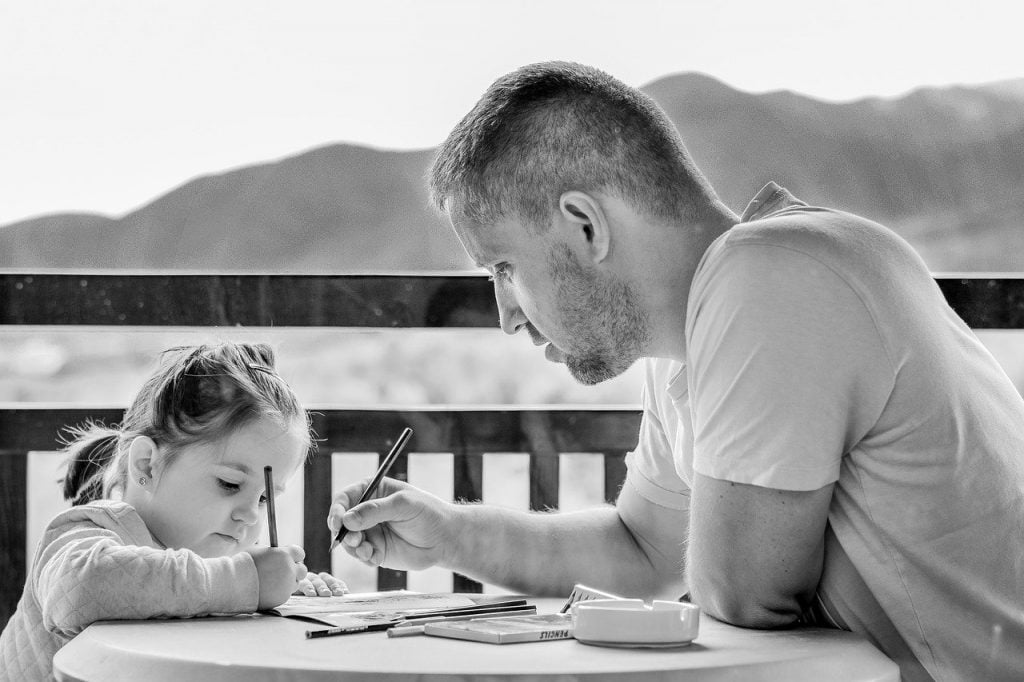
It is an infantilising process. And yet, that is not necessarily a bad thing. To be infantilised is a pejorative term in my culture. To be treated like a child; counter to a curation of ability, of success, of thriving. We are like children in this culture. When the woman who helps us in our home laughs affectionately at me for buying too much squash for a dish, she is right. I didn’t know. I was yet to learn. I am childlike in this.
I remind myself, not only are we told to echo the posture of children in our approach to the Son, but that he himself went through a process of trading power away. I have been reflecting on his forty days in the wilderness. Three temptations recorded in Luke 4 that, looking afresh, I see map to the liturgy I have been returning to again and again in these months.
The temptation to turn stones into bread, which the Dutch priest and writer, Henri Nouwen identifies as the appeal of relevance. A desire to be palatable, to be both current and significant, be the answer and be recognised for it. Knowing so little of life here confronts us with the reality of our limitations (also true in our home country, but the fallacy was easier to believe there). Instead of pursuing our own relevancy, we are learning to say: God is sufficient. I will not lack.
In the temptation to test God, there is a sense of pushing Him to act. Rather than waiting on Him and His timing, this an attempt at control. Life here is changeable; people use the phrase ‘If God wills it’ about hopes and plans for the next moment as well as the next year. This stands in stark contrast to five-year plans and forever homes. We do not know what tomorrow brings. It’s both uncomfortable and realising, as we (slowly) learn to leave the next moment with God and say: I will not fear.
To the temptation to grasp for glory and authority, the Son responds with worship of the Father. Instead of pursuing power, we are invited into presence for its own sake. I will dwell.
I find a comfort in this liturgy for childlike living: limited and yet in the presence of God whose unfailing love is powerful. Unaware of all that is ahead, and yet we can say we are unafraid. Unable to do so many things, and yet knowing He is the one who is enough.

Bea (name changed for security) is a British-born writer now living in a major city in North Africa. She and her husband are in the early years of learning language and culture, as part of a call to see churches planted in the nation. They spend most of their days just trying to follow, one conversation and one coffee shop at a time.